
Night-Time Training for Ages 2–4
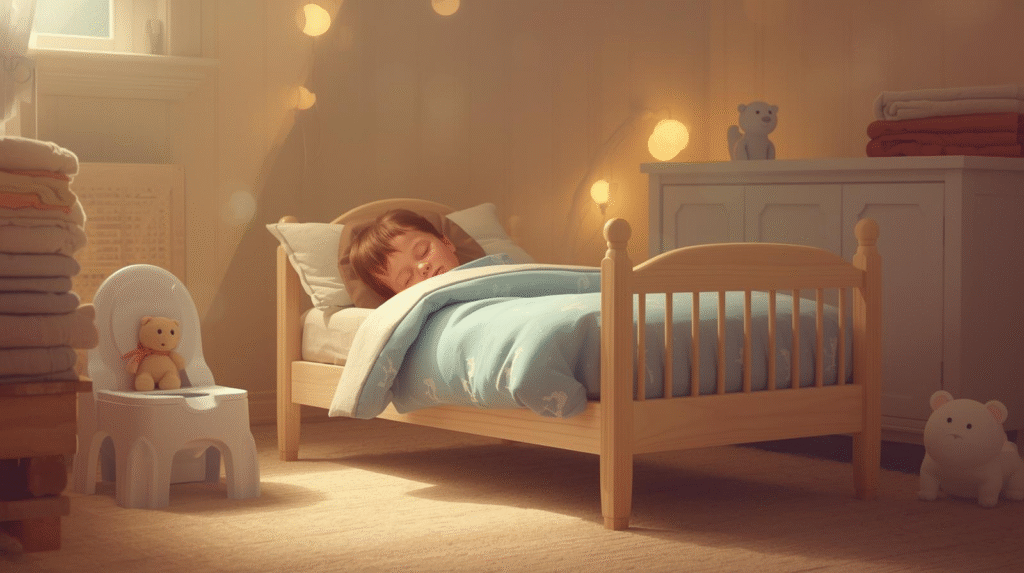
Well done! You’ve changed diapers for years and now had success with potty training. Next, night time training!
I have 7 kids and they’ve all been different in nighttime training. What has worked for one has definitely not worked for all! As I’ve been doing my research, I can see parents have been fighting the good fight against bed wetting for generations but we haven’t really moved the dial in finding the solution (although the internet sure offers lots of ideas). Check out my blog ___, it’s a real eye opener. So, buckle up, at 2-4 range there really are very few options out there so best focus on making nighttime as painless as possible and get the sleep we all need.
Why 2–4 Is a Common Wetting Stage
As daytime potty training wraps up, it’s understandable to assume nighttime dryness will follow soon after. However:
- Bladder capacity and overnight bladder control are still developing
- Many children sleep very deeply and do not yet respond to body signals
- Bedwetting at this age is still extremely common
Every child’s timeline is unique. There is no rush.
Preparation is Everything
I suggest first preparing the bed to protect the mattress and make changing the sheets as simple as possible. Our kids wore pullups at night until they didn’t want to anymore. The deal was they needed 7 nights straight of dry pullups and we’d try without.
Having done all this research on bed wetting, my new approach (once our 1-year-old gets a little older!) would be to begin nighttime training as we are wrapping up toilet training. The child is already excited about using the toilet so why not take that into nighttime training. Some research (link) shows nighttime pullups only extend bed wetting. At $.50 each, that adds up! I’d try the nighttime training for a few weeks but if there is no nighttime improvement, I’d defer until the child is showing more interest and tackle again then.
Is My Child Ready for Training?
Some kids are ready for active training at this stage and but other’s are not. My advice is if you have a really deep sleeper wetting the bed or family history of bed wetting, this might be a futile experience to try more obtrusive methods such as waking them up to go pee (literature says this doesn’t work (link) – but we’ve all tried it?) or wet bed alarms (article for wet bed alarms too early?). But if they are waking up in the night wet, you might have a chance at this early age. I’d suggest at this stage a soft approach.
Don’t set your kids up for failure.
Consistency works.
- Keep a regular bedtime.
- Don’t restrict water but make sure they don’t chug back a lot of water before bed.
- Limit sugar and fruit drinks, particularly before bed.
- Never blame your child. It’s easy to believe they are just lazy (believe me, I struggled with this!), but shaming your child will only make it worse.
Never confuse my advise for medical advise, I’m trying to make families more comfortable with bed wetting because it is so common. Go see a medical professional if you feel your child needs specialized help.
Focus on What You Can Control: The Clean-Up Process
At this stage, I’d put my focus on making the wetbed process as simple as possible. Some kids wake up in the middle of the night needing changing and others wake up in the morning soaking wet. Either way, if you have a process in place, being consistent and prepared keeps the stress out of the situation which benefits both the child and parent. Some of my tips:
- Find a bed frame that only has a headboard (if that)… Having access to all sides of the mattress allows full access to the mattress and can tuck in sheets and comforter easily.
- Find a light mattress… This is likely their first big kid bed. No need to get them a plush thick mattress. It only makes the bed heavier and awkward to move around to get the sheets on. Crib mattresses are typically 4-6 inches thick. Your 2-4 year old doesn’t weigh much so won’t feel the benefits of a thicker mattress. I’d suggest no more than a 6 inch mattress. Weight of 6 inch (40-50lbs) vs 8 (50-70lbs) is 10 to 20lbs. This matters if you are wrestling it in the middle of the night or changing sheets 2-3 times a week!
- Waterproof sheets… Unlike the mattress, I wouldn’t cheap out here. We’ve gone through a lot of cheap plastic covers. They are loud to lie on, don’t wash well and rip with wear leaving the mattress vulnerable (also why I suggest a cheap mattress). I suggest a double layer here. Put a good quality waterproof cover that zips around the full mattress on first and then a second waterproof cover that just elastics around the corners of the mattress for easy removal. If there is a wetbed in the middle of the night we’d just remove all the wet stuff including the top waterproof cover and the child would go back to sleep on the first cover with just a fresh comforter and dealt with the laundry in the morning. Don’t put the plastic cover in the dryer! We found just once through the dryer and while it would look fine, lost its water proofness. Better to keep one or two extra on hand and let air dry.
- Washable Bed Pads… We didn’t do this much. In my view, it essentially replaces the pullup. These could be a savour though if at a hotel or overnighting at someone else’s home.
- Potty beside the bed… Make the toilet as accessible as possible. If you used a potty for toilet training, put the potty right beside the bed and top of mind for the child.
Key Takeaway
At ages 2–4, progress in nighttime dryness varies widely so don’t panic.
The most effective goals during this stage are:
- Reducing stress for the family
- Protecting the mattress and bedding
- Encouraging the child’s confidence and readiness
- Supporting routines that build toward independence
Nighttime training is a journey with natural ups and downs — and every small success matters.
Keep dry,
Dad